What Causes Hot Spots on Dogs?
Founder & Veterinary Clinical Advisor at Pets Health Tips · DVM (Doctor of Veterinary Medicine), Member of the American Veterinary Medical Association (AVMA) · 14+ years in companion animal clinical triage, preventative nutrition, and geriatric pet therapy
Hot spots on dogs are painful, fast-spreading skin infections that leave both pets and owners stressed. If you're wondering what causes hot spots on dogs, the short answer is usually a mix of irritation, moisture, and bacteria, but the real culprit is often what your dog does next: excessive licking, scratching, or chewing that turns a small problem into a big one. These lesions can blow up in size within hours, so knowing the triggers helps you act fast.
Acute moist dermatitis, the technical term for hot spots, affects up to 10% of dogs at some point in their lives, with thick-coated breeds like Golden Retrievers and German Shepherds being especially prone. Left untreated, they can lead to deeper infections or even systemic issues, so early recognition is key.
what causes hot spots on dogs
Hot spots are caused by bacterial overgrowth, usually Staphylococcus or Streptococcus, triggered by skin irritation. Common triggers include allergies, flea bites, trapped moisture, or poor grooming. Self-trauma from licking or scratching then worsens the infection.
Underlying issues like stress or anal gland problems can also play a role.
The 6 Most Common Causes of Hot Spots in Dogs
Hot spots don’t appear out of nowhere. They’re almost always the result of an initial irritation that your dog can’t leave alone. Here are the six most frequent causes, ranked by how often they show up in vet clinics as of 2026.
Allergies
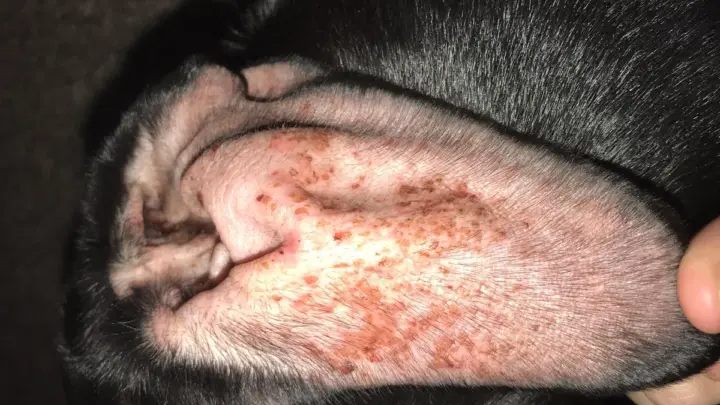
Environmental allergens (pollen, dust mites) or food sensitivities cause itching, leading to scratching and licking. This breaks the skin, inviting bacteria in. Flea allergy dermatitis is a top offender, even a single flea bite can spark a hot spot in sensitive dogs.
Fleas and Ticks
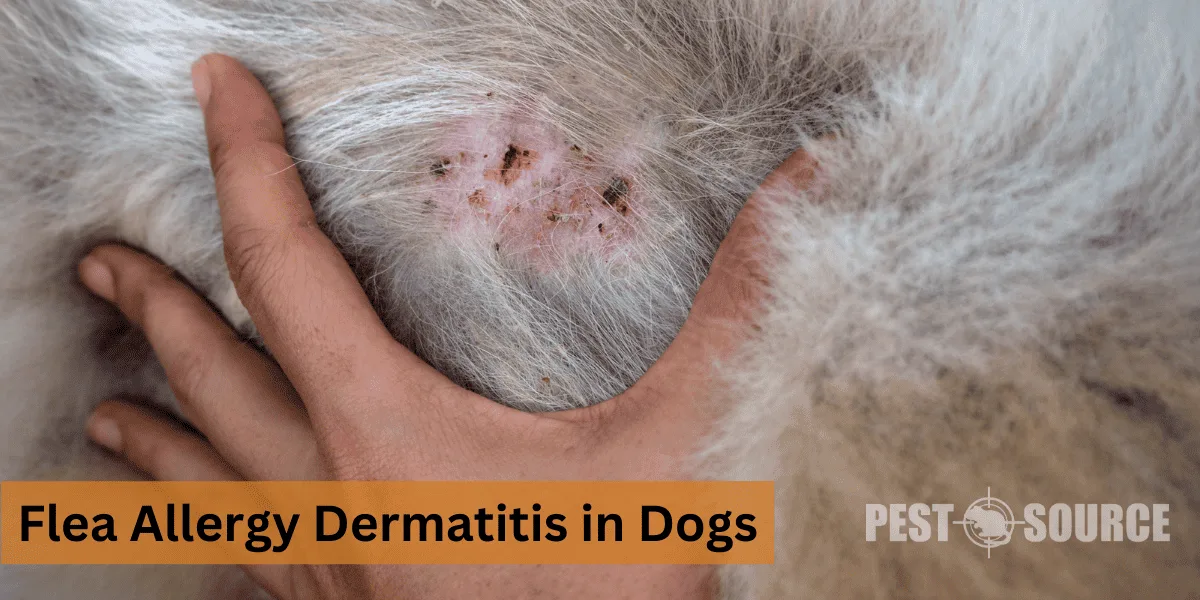
Image source: Bing (Web (fair-use with source credit))
These parasites don’t just bite; their saliva triggers intense itching. Dogs with flea allergies react severely, often targeting their tail base, hips, or groin. Ticks can cause localized irritation that turns into a hot spot if your dog keeps bothering the area.
Moisture Trapped in the Coat
Swimming, baths, or even humid weather can leave moisture trapped against the skin. This creates the perfect breeding ground for bacteria. Breeds with thick or long coats, like Labradors or Collies, are especially vulnerable.
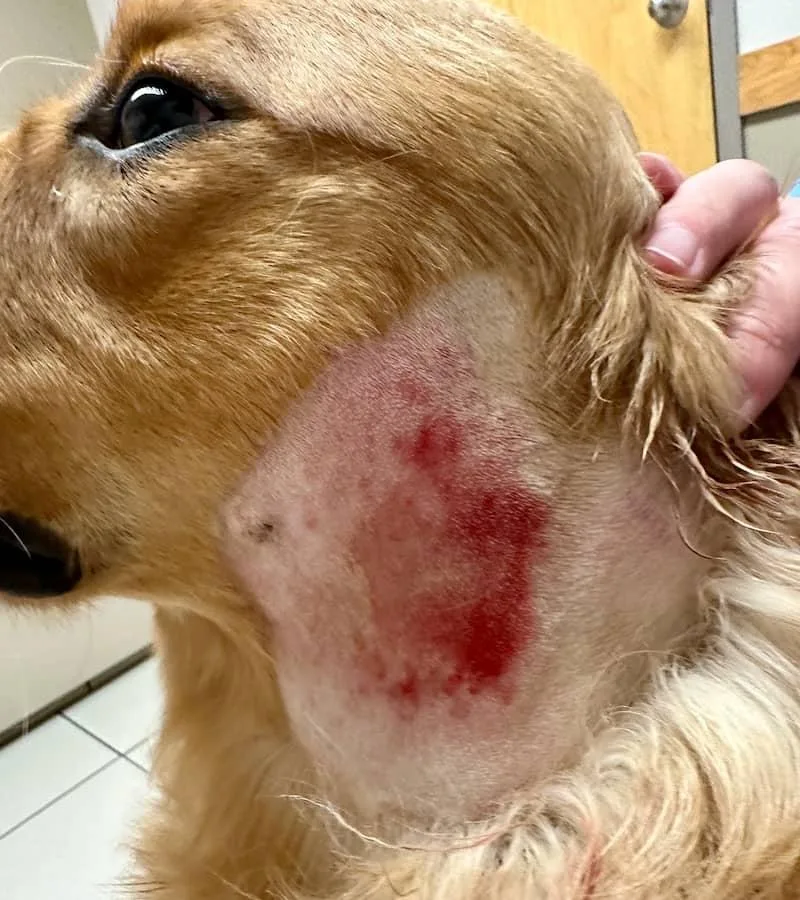
Image source: Bing (Web (fair-use with source credit))
Poor Grooming or Matted Fur
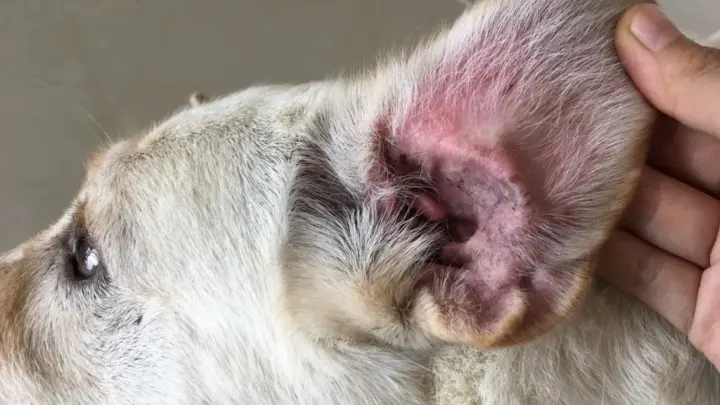
Tangled fur pulls at the skin and traps dirt, moisture, and bacteria. Regular brushing prevents mats, but neglected coats can quickly lead to hot spots, especially in areas like behind the ears or under the legs.
Underlying Skin Conditions
Dogs with atopic dermatitis or contact dermatitis already have compromised skin barriers. A small scratch or irritation can escalate into a hot spot much faster than in a healthy dog.
Stress or Anxiety
Just like humans, dogs under stress may develop physical symptoms. Excessive licking or chewing, often focused on the paws or legs, can create self-inflicted wounds that turn into hot spots.
How to Tell If Your Dog Has a Hot Spot (Key Signs)
Hot spots are hard to miss once they’ve developed, but catching them early can save your dog a lot of discomfort. The sooner you spot the signs, the easier they are to treat.
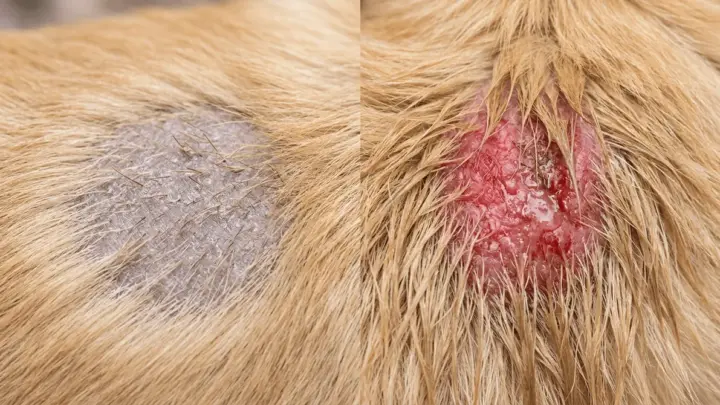
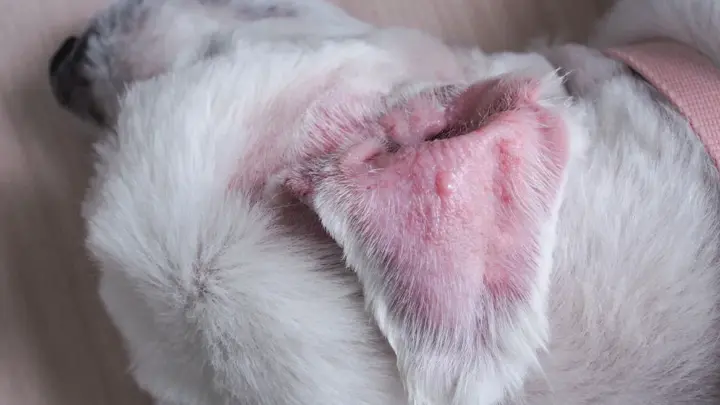
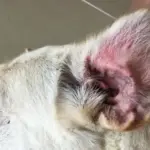
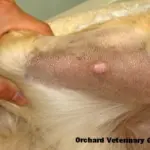
The most obvious sign is a red, inflamed patch of skin that looks raw and may ooze pus or fluid. These spots are often warm to the touch and extremely tender, so your dog may yelp or flinch when you get near them.
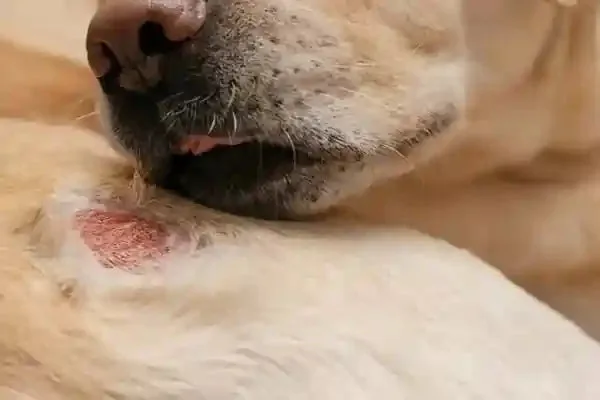
Image source: Bing (Web (fair-use with source credit))
You’ll also notice your dog paying extra attention to the area, licking, chewing, or scratching nonstop. Hair loss is another clue, as the constant friction wears away the fur. In some cases, you might even smell a foul odor coming from the spot, a sign of bacterial infection.
Hot spots can appear anywhere, but they’re most common on the head, neck, chest, hips, and base of the tail. If you see any of these signs, it’s time to take action.
What to Do (and Not Do) When You Spot One
Finding a hot spot on your dog can be alarming, but staying calm and acting quickly is key. The wrong move can make things worse, so here’s what to do, and what to avoid.
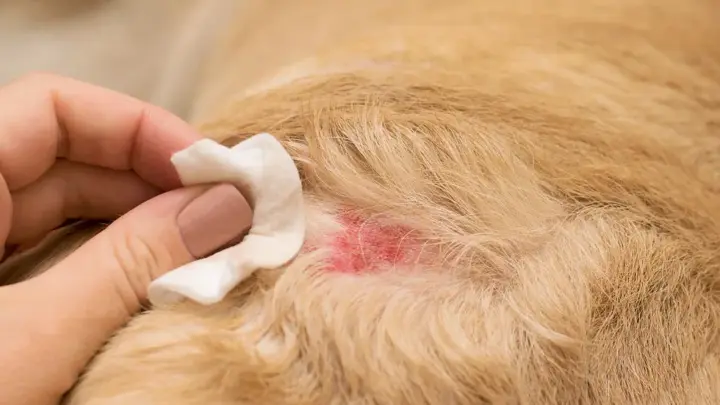
First, clip the fur around the area carefully with blunt-tipped scissors or clippers. This helps the spot dry out and makes it easier to clean. Avoid pulling at matted fur, as this can cause more pain.
Next, clean the area gently with a mild antiseptic solution like chlorhexidine, which is safe for dogs. Avoid harsh products like hydrogen peroxide or alcohol, as these can irritate the skin further. Pat the area dry with a clean towel.
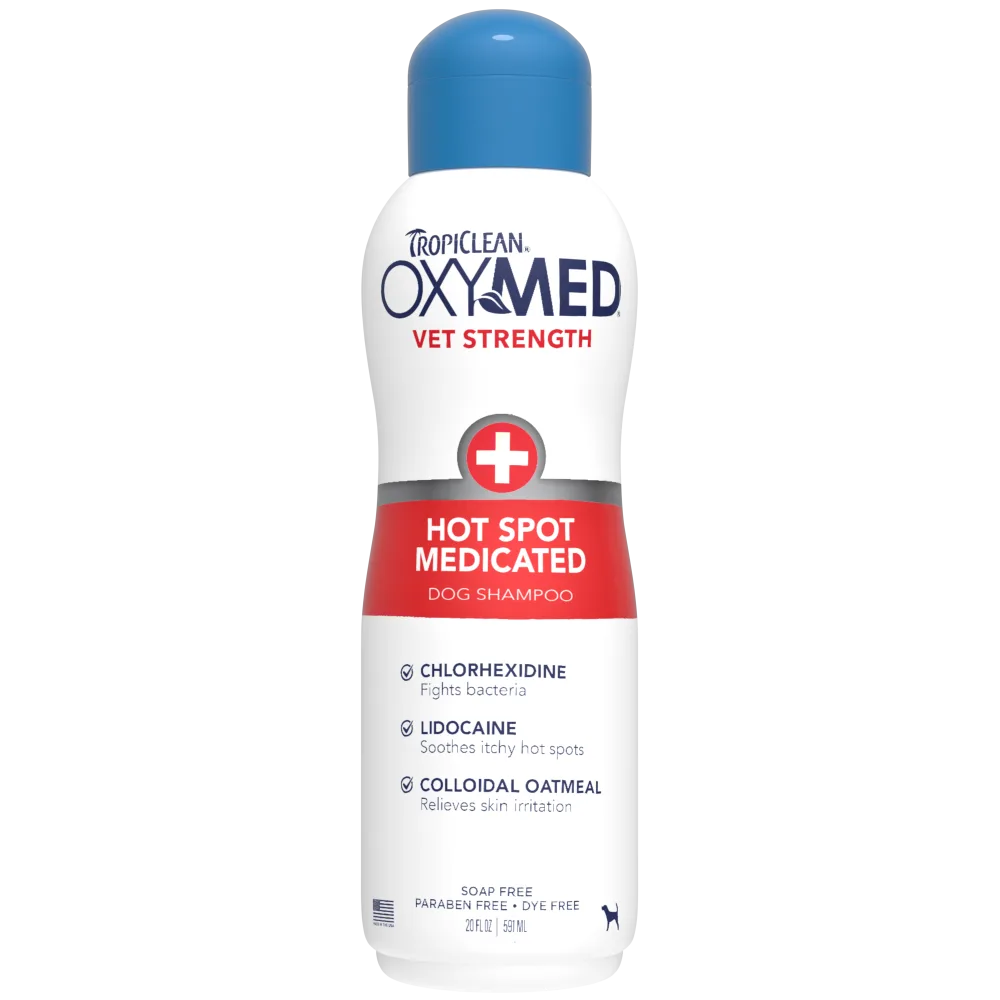
Image source: Bing (Web (fair-use with source credit))
Prevent your dog from licking or scratching the spot. An Elizabethan collar (cone) is the most reliable way to keep them from making it worse. If the hot spot is small and caught early, you might get away with a soft recovery suit, but cones are the gold standard.
Do not use human medications like Neosporin, hydrocortisone, or tea tree oil. These can be toxic or cause further irritation. Also, avoid home remedies you find online unless they’ve been vet-approved.
If the hot spot is larger than a coin, deeply inflamed, or spreading quickly, see your vet immediately. They may prescribe oral antibiotics, anti-inflammatories, or pain relief to get it under control.
How Vets Treat Hot Spots—and When to See One
Vets take a multi-step approach to treating hot spots, focusing on both the immediate infection and the underlying cause. The first priority is stopping the self-trauma, so they’ll often start by clipping and cleaning the area thoroughly.
For mild cases, a vet might prescribe a topical antibiotic ointment or spray, along with an anti-inflammatory to reduce itching and swelling. If the infection is more severe, oral antibiotics are usually necessary to tackle the bacteria from within.
Pain management is also key. Hot spots are painful, and a dog in pain is more likely to keep licking or scratching. Your vet may recommend NSAIDs or other pain relievers to keep your dog comfortable while the spot heals.
The underlying cause is just as important as the hot spot itself. If allergies are to blame, your vet might suggest allergy testing or a hypoallergenic diet. For flea-related hot spots, they’ll recommend a flea prevention plan to avoid future flare-ups.
If stress is the trigger, they may discuss behavioral modifications or anxiety-reducing strategies.
So when should you see a vet? If the hot spot is larger than an inch in diameter, bleeding or oozing heavily, or spreading rapidly, don’t wait. Also, if your dog seems lethargic, feverish, or in significant pain, it’s a sign the infection may be more serious.
According to the American Veterinary Medical Association, early intervention can prevent complications like cellulitis or sepsis.
How to Prevent Hot Spots from Coming Back
Prevention starts with keeping your dog’s skin and coat healthy. Regular grooming is non-negotiable, especially for breeds with thick or long fur. Brush them at least a few times a week to prevent mats and remove loose hair that can trap moisture.
Flea and tick prevention is another critical step. Use vet-recommended products year-round, not just in warmer months. Even one flea bite can trigger a hot spot in a sensitive dog.
Check your dog’s coat after walks, especially if they’ve been in tall grass or wooded areas.
Allergies are a common underlying cause, so work with your vet to identify and manage them. This might involve switching to a hypoallergenic diet, using air purifiers, or giving allergy medications. If your dog has a history of hot spots, ask about omega-3 supplements, which can improve skin health.
Stress can also play a role, so keep an eye on your dog’s behavior. Boredom, anxiety, or changes in routine can lead to excessive licking or chewing. Provide plenty of mental and physical stimulation, and consider calming aids if needed.
Finally, dry your dog thoroughly after baths, swims, or rain exposure. Moisture is a breeding ground for bacteria, and even a little dampness can lead to trouble. Pay extra attention to skin folds, ears, and paws, where water tends to linger.
Frequently Asked Questions
Can hot spots heal on their own?
No, hot spots rarely heal without intervention. The cycle of itching, licking, and infection usually continues until the underlying cause is addressed and the area is properly treated.
How long does it take for a hot spot to heal?
With proper treatment, most hot spots improve within 3 to 7 days. Severe cases may take up to 2 weeks. If the spot isn’t healing or is getting worse, see your vet.
Are certain breeds more prone to hot spots?
Yes, breeds with thick or long coats, like Golden Retrievers, Labradors, and German Shepherds, are more susceptible. Their fur traps moisture and dirt, creating ideal conditions for hot spots.
Can I use human antibiotic ointment on my dog?
No, human medications like Neosporin can be harmful if ingested. Always use vet-approved products for your dog’s skin.
Why does my dog keep getting hot spots in the same spot?
Recurrent hot spots often signal an unresolved underlying issue, such as allergies, fleas, or stress. Work with your vet to identify and address the root cause.

Similar Posts