Dog Body Condition Score: A Simple Guide
Founder & Veterinary Clinical Advisor at Pets Health Tips · DVM (Doctor of Veterinary Medicine), Member of the American Veterinary Medical Association (AVMA) · 14+ years in companion animal clinical triage, preventative nutrition, and geriatric pet therapy
Your dog’s weight isn’t the whole story. The dog body condition score explained is how vets and owners judge whether a dog is at a healthy weight by looking at body fat and muscle, not just the number on the scale. It’s a hands-on way to spot problems before they show up in pounds.
The most widely used system is the 9-point scale from the World Small Animal Veterinary Association, where 1 is emaciated and 9 is severely obese. As of 2026, it remains the gold standard for assessing canine health in clinics worldwide.
dog body condition score explained
It’s a visual and hands-on method to evaluate a dog’s body fat. Vets use a 9-point or 5-point scale to score a dog’s condition. The score is based on rib, waist, and abdomen checks.
It helps determine if a dog is underweight, ideal, or overweight.
Why Your Dog’s Body Condition Score Matters More Than Weight
Weight alone can be misleading. A muscular dog might weigh more but still be healthy, while a lighter dog could be carrying too much fat. The body condition score looks at fat distribution and muscle mass, giving a clearer picture of overall health.
It’s also a predictor of future issues. Dogs with a high score are at greater risk for diabetes, arthritis, and heart disease. A low score can signal malnutrition or underlying illness.
Regular BCS checks help catch these risks early.
How the Dog Body Condition Score Works (9-Point vs. 5-Point)
The 9-point scale is the most common, developed by the World Small Animal Veterinary Association. It ranges from 1 (emaciated) to 9 (severely obese), with 4-5 being the ideal range for most dogs. Each number corresponds to specific physical traits, like rib visibility and waist definition.
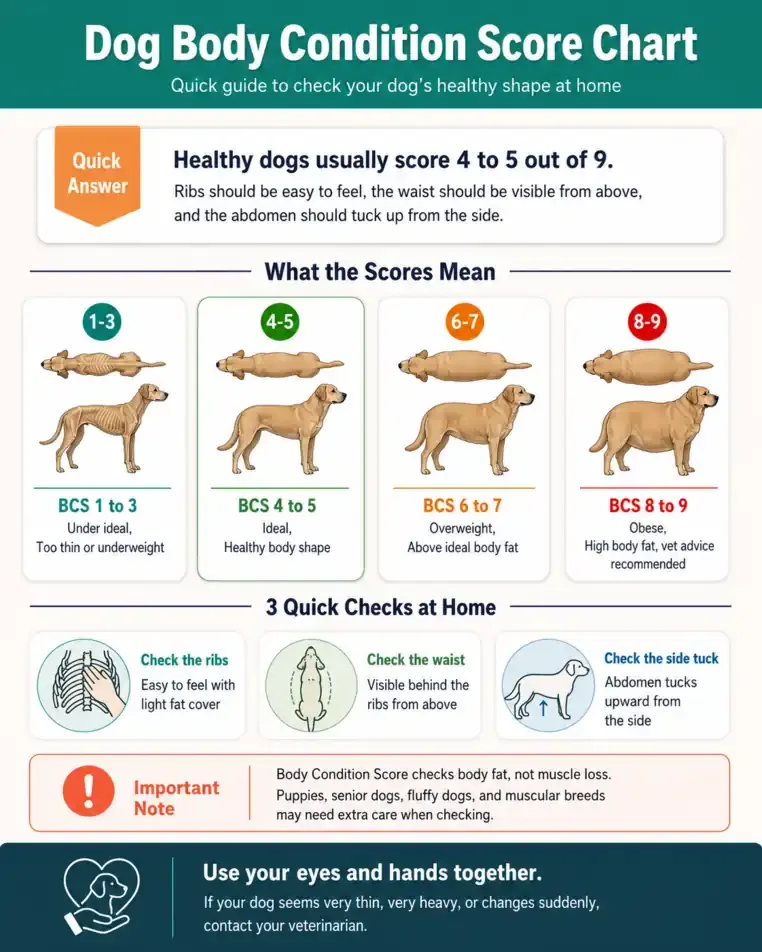
Image source: Bing (Web (fair-use with source credit))
The 5-point scale simplifies this into broader categories: 1 (too thin), 2 (underweight), 3 (ideal), 4 (overweight), and 5 (obese). It’s easier for owners to use at home but lacks the precision of the 9-point system.
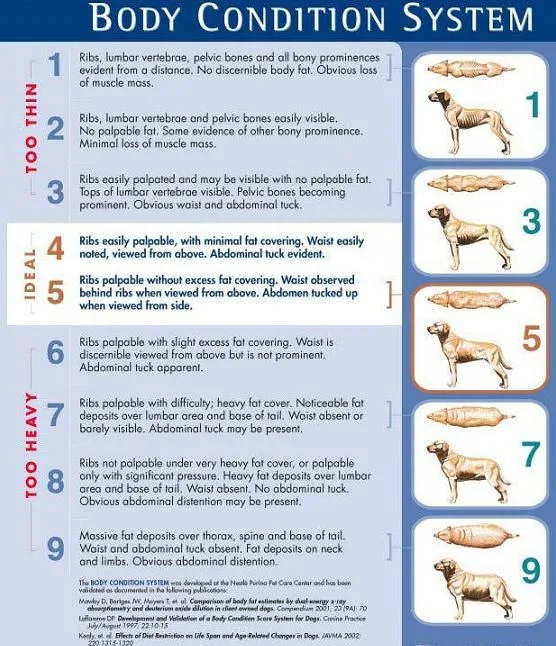
Image source: Bing (Web (fair-use with source credit))
Both scales rely on the same key checks: rib feel, waistline, and abdominal tuck. The 9-point scale is preferred by vets for its detail, while the 5-point scale works well for quick home assessments.
Step-by-Step: How to Assess Your Dog’s BCS at Home
Start with a visual check from above. Look for a visible waist behind the ribs. If the waist is absent or bulging, the dog may be overweight.
A pronounced waist could indicate underweight.
Next, view your dog from the side. You should see a slight tuck in the abdomen. No tuck or a sagging belly suggests excess weight.
A deep tuck may mean the dog is too thin.
Now, use your hands. Run your fingers along the ribs. In an ideal score, you should feel the ribs easily with a slight fat covering.
If the ribs are hard to find under fat, the score is too high. If the ribs are sharply visible with no fat, the score is too low.
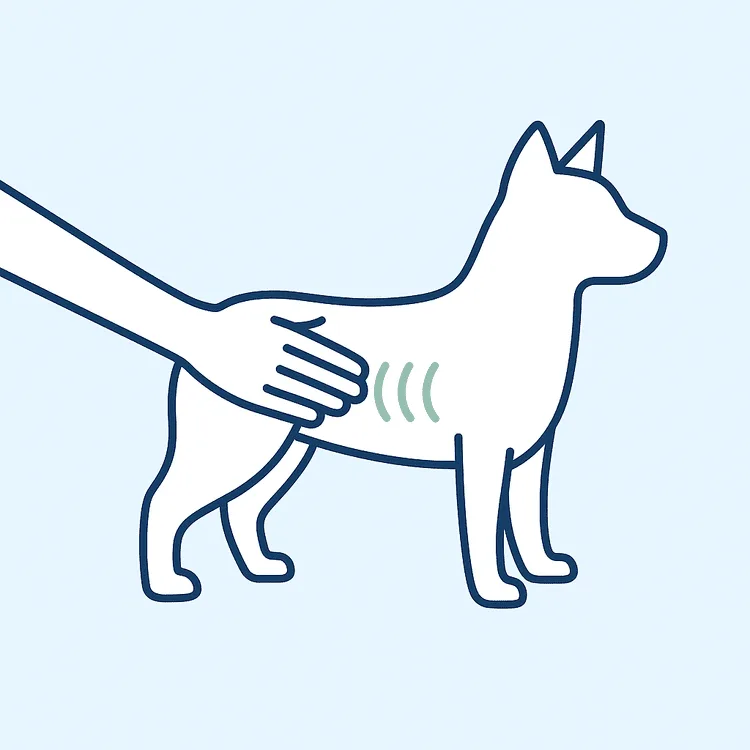
Image source: Bing (Web (fair-use with source credit))
Finally, check the base of the tail and hip bones. Fat deposits here can indicate obesity. Muscle definition around the shoulders and hips should be visible but not exaggerated.
What Each Score Means—From Emaciated to Obese
Here’s what each score on the 9-point scale looks like in practice:
| Score | Description | Ribs | Waist | Abdominal Tuck |
|---|---|---|---|---|
| 1 | Emaciated | Ribs, spine, and hip bones visible | No waist | No tuck |
| 2 | Very Thin | Ribs easily visible | Minimal waist | Slight tuck |
| 3 | Thin | Ribs easily felt | Noticeable waist | Obvious tuck |
| 4 | Underweight | Ribs felt with slight fat | Waist visible | Tuck present |
| 5 | Ideal | Ribs felt with light fat covering | Waist clearly visible | Clear tuck |
| 6 | Overweight | Ribs felt with difficulty | Waist barely visible | Minimal tuck |
| 7 | Heavy | Ribs buried under fat | No waist | No tuck |
| 8 | Obese | Ribs deeply buried | No waist, rounded back | No tuck, distended abdomen |
| 9 | Severely Obese | Massive fat deposits | No waist, fat rolls | No tuck, sagging belly |
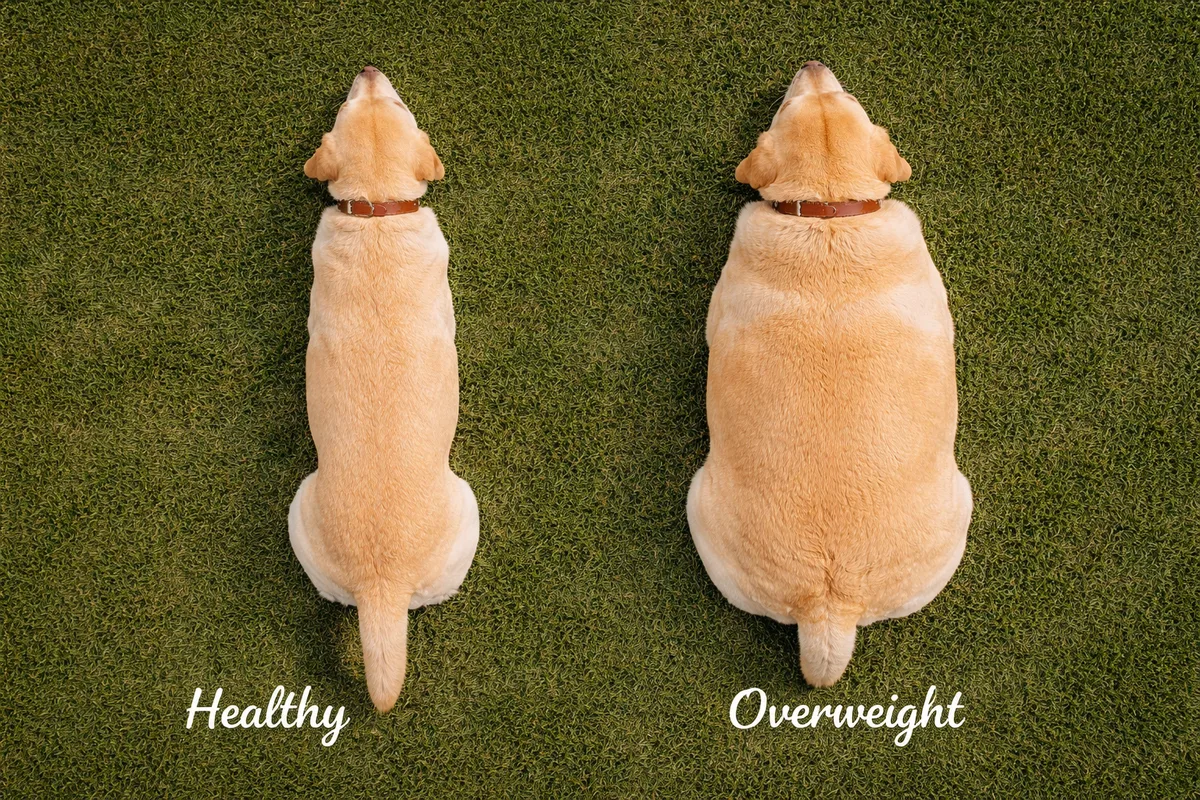
Image source: Bing (Web (fair-use with source credit))
Scores 1-3 indicate underweight, often due to poor nutrition or illness. Scores 6-9 signal obesity, which can lead to serious health issues. A score of 4-5 is ideal for most breeds, though some, like Greyhounds, naturally score lower due to their lean build.
Common Mistakes That Lead to Wrong Scores
Owners often overestimate their dog’s condition. A dog that looks cute and cuddly might actually be overweight. The rib check is the most reliable indicator, not appearance alone.
Long-haired breeds can trick the eye. Thick fur hides the waistline and ribs, making visual assessment harder. Palpation is key for these dogs.
Some assume a visible waist means the dog is underweight. That’s not always true. Breeds like Greyhounds naturally have a pronounced waist even at a healthy weight.
Another mistake is ignoring muscle mass. A dog can have a good BCS but poor muscle definition, which signals other health issues. Always check for both fat and muscle.
When to Adjust Diet, Exercise, or Call the Vet
A score of 1-3 means it’s time to investigate. Underweight dogs may need a vet visit to rule out parasites, dental issues, or metabolic disorders. Increase food gradually, using high-quality, calorie-dense options.
For scores of 6-7, cut back on treats and table scraps. Switch to a weight-management diet if needed. Increase exercise slowly to avoid joint stress.
Scores of 8-9 require immediate action. Obesity shortens lifespan and worsens joint, heart, and respiratory problems. A vet can create a safe weight-loss plan, often targeting 1-2% body weight loss per week.
Even ideal scores need monitoring. Senior dogs and less active breeds can gain weight quickly. Reassess every 2-4 weeks and adjust as needed.
If you’re unsure about the score, consult a vet. They can provide an objective assessment and tailored advice. Early intervention prevents long-term health issues.

Similar Posts