Stages of Periodontal Disease in Dogs Explained
Founder & Veterinary Clinical Advisor at Pets Health Tips · DVM (Doctor of Veterinary Medicine), Member of the American Veterinary Medical Association (AVMA) · 14+ years in companion animal clinical triage, preventative nutrition, and geriatric pet therapy
Bad breath isn’t just a nuisance in dogs, it’s often the first sign of the stages of periodontal disease in dogs, a progressive condition that can lead to pain, tooth loss, and even systemic health issues. Left unchecked, what starts as mild gum inflammation can escalate to irreversible damage, affecting your dog’s quality of life.
According to the American Veterinary Dental College, over 80% of dogs show signs of periodontal disease by age 3. Recognizing the stages early can mean the difference between a simple cleaning and costly extractions.
stages of periodontal disease in dogs
Periodontal disease in dogs progresses in four stages. Stage 1 is gingivitis, with red or swollen gums but no bone loss. Stage 2 introduces early periodontitis, with mild bone loss under 25%.
Stage 3 involves moderate bone loss of 25, 50%. Stage 4 is advanced, with over 50% bone loss and possible tooth mobility.
Why Periodontal Disease in Dogs Is a Silent Threat (And How to Spot It Early)
Periodontal disease often goes unnoticed because dogs hide pain well. Bad breath, or halitosis, is the most common early sign, caused by bacteria in plaque. Other red flags include red or bleeding gums, difficulty eating, and pawing at the mouth.
As the disease progresses, you might notice loose teeth, nasal discharge, or even behavioral changes like irritability. These symptoms indicate the infection has spread deeper into the gum tissue and bone. Catching these signs early can prevent irreversible damage.
The 4 Stages of Dog Periodontal Disease: What’s Happening in Their Mouth
Periodontal disease in dogs follows a clear progression, each stage marked by specific changes in the mouth. Understanding these stages helps you recognize the urgency of intervention.
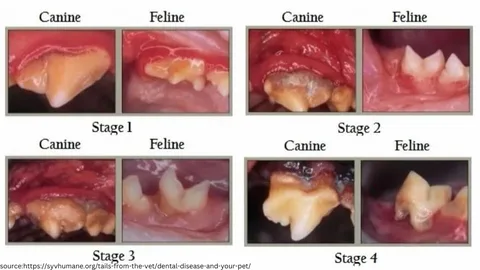
Image source: Bing (Web (fair-use with source credit))
Stage 1: Gingivitis
This is the only reversible stage. Plaque buildup causes gum inflammation, but there’s no bone loss yet. The gums may appear red or swollen, and bad breath is common.
At this point, professional cleaning and improved at-home care can restore gum health.
Stage 2: Early Periodontitis
Here, the inflammation has progressed to mild bone loss, typically less than 25%. The gums may recede slightly, and pockets begin to form around the teeth. This stage requires professional intervention to prevent further damage.
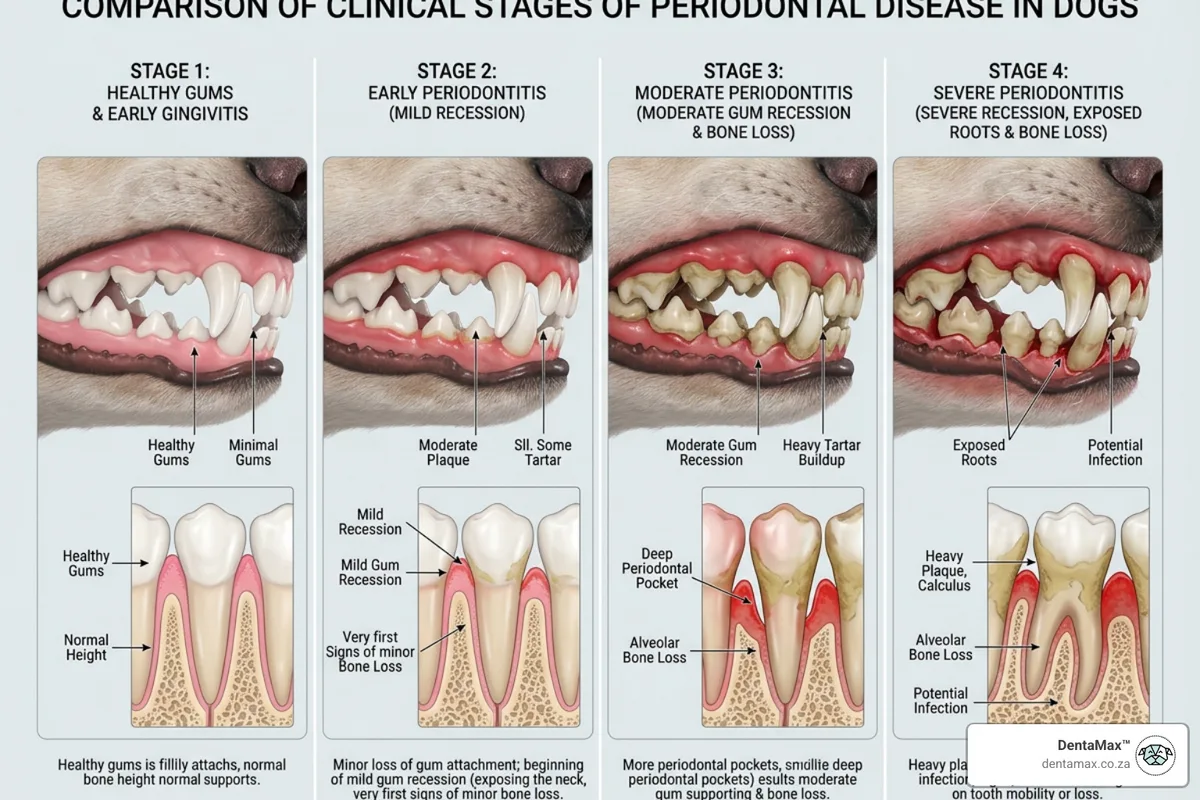
Image source: Bing (Web (fair-use with source credit))
Stage 3: Moderate Periodontitis
Bone loss reaches 25, 50%, and gum pockets deepen, trapping more bacteria. Teeth may start to loosen, and your dog might show signs of pain or discomfort while eating. Treatment often involves deep cleaning and possibly tooth extraction.
Stage 4: Advanced Periodontitis
This is the most severe stage, with over 50% bone loss. Teeth are often loose or missing, and infections can spread to other parts of the body, affecting the heart, kidneys, or liver. Aggressive treatment, including extractions and antibiotics, is usually necessary.
How Vets Diagnose Each Stage (And What It Means for Treatment)
Vets use a combination of visual exams, probing, and X-rays to diagnose periodontal disease. During a visual exam, they look for plaque, tartar, and gum inflammation. Probing measures the depth of gum pockets, which indicates the severity of the disease.
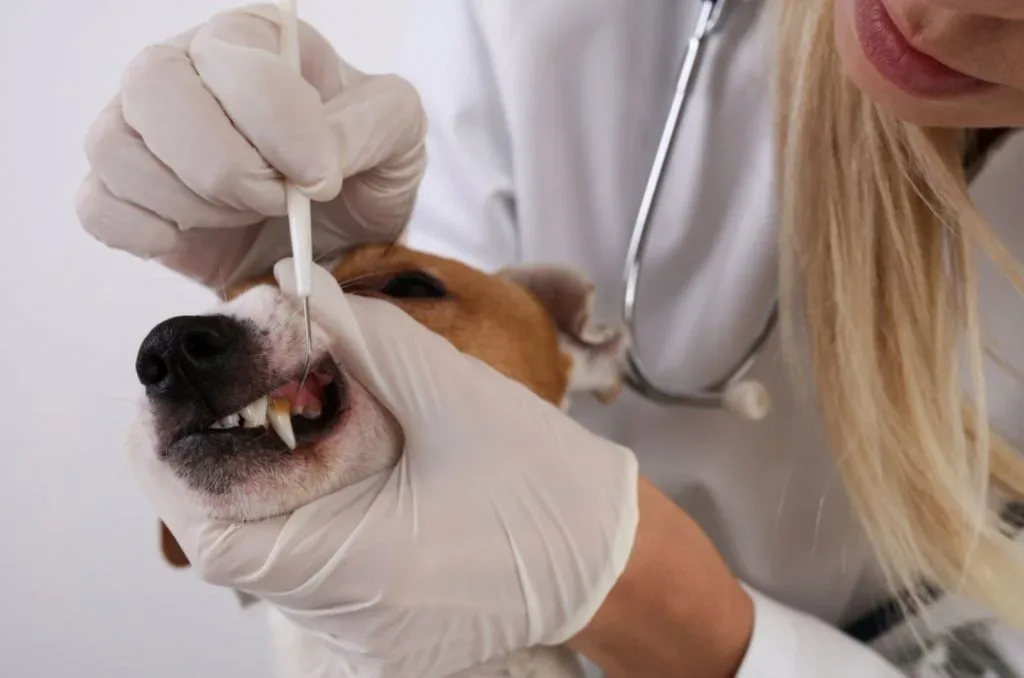
Image source: Bing (Web (fair-use with source credit))
Dental X-rays are critical for assessing bone loss, which isn’t visible to the naked eye. They reveal the extent of damage around the tooth roots and help determine the appropriate treatment plan. For example, Stage 1 might only need a professional cleaning, while Stage 4 often requires extractions.
The American Veterinary Dental College provides guidelines for staging and treatment, which most vets follow. Early stages focus on cleaning and preventive care, while advanced stages may require surgical intervention. The sooner the disease is caught, the simpler and less costly the treatment.
Can You Reverse It? What Works at Each Stage
Stage 1 gingivitis is the only reversible stage of periodontal disease. With professional cleaning and consistent at-home care, such as daily brushing and dental chews, you can restore gum health. The key is removing plaque before it hardens into tartar.
For Stage 2, professional cleaning is essential to remove tartar below the gumline. At-home care can slow progression but won’t reverse the bone loss that’s already occurred. Your vet may recommend more frequent cleanings to manage the disease.
Once the disease reaches Stage 3 or 4, the damage is permanent. Treatment focuses on managing the condition to prevent further deterioration. This might include deep cleaning, antibiotics, or tooth extractions.
Pain management and regular vet checkups become crucial to maintain your dog’s quality of life.
At-Home Care vs. Professional Treatment: What’s Actually Effective
Daily brushing with dog-safe toothpaste is the gold standard for at-home care. It removes plaque before it hardens into tartar, which is the primary cause of gum inflammation. VOHC-approved dental chews and water additives can also help reduce plaque buildup between brushings.
Image source: Wikimedia Commons / U.S. Department of Agriculture
Professional cleanings by a vet are non-negotiable for preventing and treating periodontal disease. These cleanings remove tartar below the gumline, which at-home care can’t reach. The American Animal Hospital Association recommends annual dental checkups for most dogs, with more frequent cleanings for breeds prone to dental issues.
At-home care slows progression but can’t reverse existing damage. Professional treatment is required for stages beyond gingivitis. Combining both gives your dog the best chance of maintaining healthy teeth and gums long-term.
Costs, Risks, and When to Act Fast
Professional dental cleanings typically cost between $200 and $600, depending on your location and the clinic. Tooth extractions can add $100 to $300 per tooth, and full-mouth X-rays usually run $100 to $250. These costs reflect the anesthesia, monitoring, and specialized equipment required for safe and thorough treatment.
The risks of untreated periodontal disease extend beyond the mouth. Bacteria from infected gums can enter the bloodstream, potentially damaging the heart, kidneys, or liver. Small breeds and brachycephalic dogs are at higher risk due to their dental anatomy, so early intervention is critical.
Act fast if you notice bleeding gums, loose teeth, or a sudden refusal to eat. These signs often indicate advanced disease, where delays can lead to irreversible damage. Regular vet visits help catch issues early, when treatment is simpler and less costly.
Frequently Asked Questions
Can periodontal disease in dogs be cured?
Stage 1 gingivitis can be reversed with professional cleaning and consistent at-home care. Later stages cannot be cured, but treatment can manage the condition and prevent further damage. The key is early detection and intervention.
How often should I brush my dog’s teeth?
Ideally, brush your dog’s teeth daily to prevent plaque buildup. If daily brushing isn’t feasible, aim for at least 3 to 4 times a week. Use a dog-specific toothbrush and toothpaste, as human products can be toxic.
Are dental chews enough to prevent periodontal disease?
Dental chews help reduce plaque but are not a substitute for brushing or professional cleanings. Look for products with the VOHC seal, which indicates they meet standards for plaque and tartar control. Combine chews with brushing for the best results.
Why does my dog’s breath smell so bad?
Bad breath, or halitosis, is often the first sign of periodontal disease. It’s caused by bacteria in plaque and tartar, which release foul-smelling compounds. If the smell persists despite at-home care, it’s time for a vet visit.
Is anesthesia-free dental cleaning safe for dogs?
Anesthesia-free cleanings are less thorough and can miss critical areas below the gumline. The American Veterinary Dental College does not endorse them, as they fail to address the root causes of periodontal disease. Full anesthesia allows for a complete exam, cleaning, and X-rays.
Can small breeds develop periodontal disease faster?
Yes, small breeds like Chihuahuas, Dachshunds, and Poodles are more prone to periodontal disease due to their crowded teeth and smaller jaw size. This makes plaque buildup more likely, so they often need more frequent dental care.

Similar Posts