Is Your Dog Overweight? 5 Signs to Check
Founder & Veterinary Clinical Advisor at Pets Health Tips · DVM (Doctor of Veterinary Medicine), Member of the American Veterinary Medical Association (AVMA) · 14+ years in companion animal clinical triage, preventative nutrition, and geriatric pet therapy
A chubby dog might look cute, but extra weight can cut years off their life. Knowing how to tell if a dog is overweight is the first step to keeping them healthy and active. Obesity in dogs isn’t just about looks, it’s linked to diabetes, arthritis, and heart disease.
The Association for Pet Obesity Prevention reports that over 50% of dogs are classified as overweight or obese as of 2026. The good news is you don’t need a vet to spot the early signs.
how to tell if a dog is overweight
Look for a missing waist when viewed from above. Feel for ribs that are hard to detect under fat. Notice a sagging belly with no tuck.
Check for fat pads at the base of the tail. Compare to breed-specific weight charts.
The 3 ways to tell if your dog is overweight
There are three reliable methods to assess your dog’s weight: visual inspection, hands-on palpation, and the Body Condition Score (BCS). Each gives you a different angle, so using all three paints the clearest picture.
Visual inspection means looking at your dog from above and the side. From above, you should see a defined waist behind the ribs. From the side, the belly should tuck up toward the hind legs.
If these lines are missing, your dog is likely carrying extra weight.
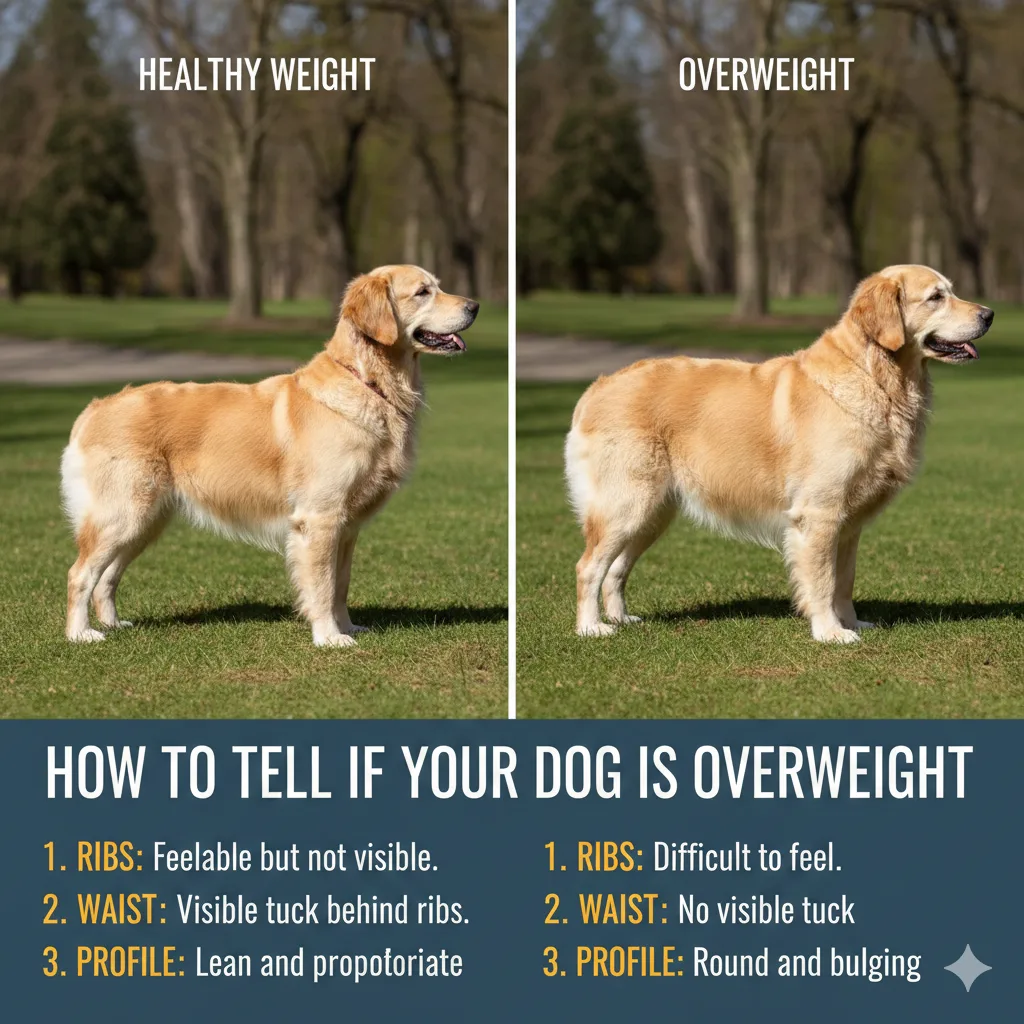
Image source: Bing (Web (fair-use with source credit))
Hands-on palpation is about feeling, not just seeing. Run your hands along your dog’s sides. You should be able to feel the ribs without pressing hard, but they shouldn’t be visible.
If you can’t feel the ribs at all, that’s a red flag.

Image source: Bing (Web (fair-use with source credit))
How to use the Body Condition Score (BCS) system
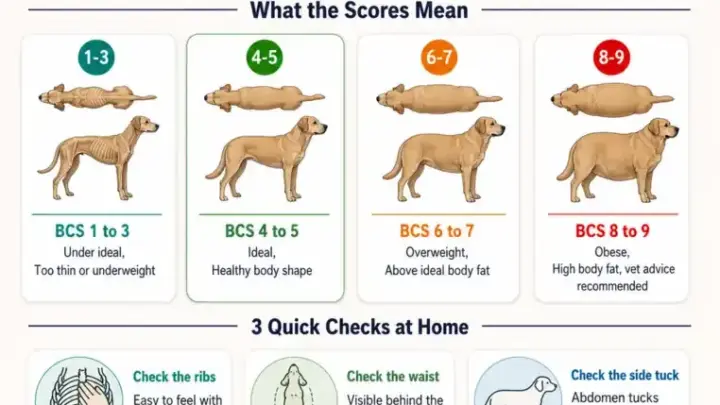
The Body Condition Score is a standardized way to assess a dog’s weight on a scale of 1 to 9. A score of 1 means the dog is severely underweight, while 9 indicates extreme obesity. The ideal score for most dogs is between 4 and 5.
Here’s how the scoring breaks down:
| Score | Description | Visual Signs |
|---|---|---|
| 1-3 | Underweight | Ribs, spine, and hip bones visible; waist and tuck exaggerated |
| 4-5 | Ideal | Ribs easily felt but not seen; waist visible from above; abdominal tuck present |
| 6-7 | Overweight | Ribs hard to feel under fat; waist barely visible; noticeable fat deposits |
| 8-9 | Obese | Ribs buried under fat; no waist or tuck; fat pads on neck and base of tail |
To use the BCS system, start by observing your dog from a distance. Then, run your hands over their body to feel for fat coverage. Match what you see and feel to the descriptions above.
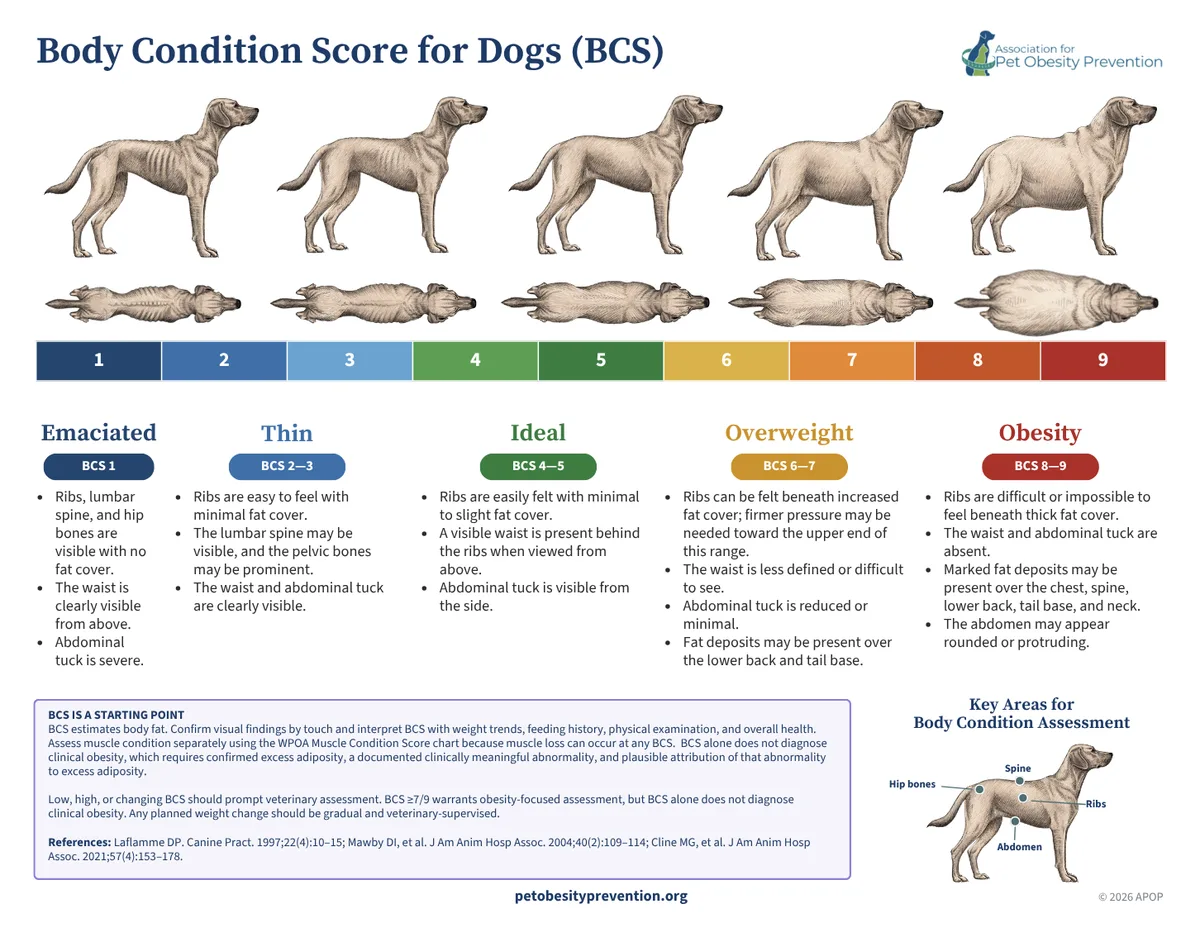
Image source: Bing (Web (fair-use with source credit))
Veterinarians often use this system because it accounts for differences in breed and size. For example, a Greyhound will naturally have a more visible waist than a Bulldog. The BCS helps normalize these variations so you can get an accurate read.
Breed-specific quirks that trip people up
Not all dogs carry weight the same way. Some breeds are naturally stockier, while others are leaner. For example, a healthy Bulldog might look overweight to someone used to seeing Whippets.
Knowing your dog’s breed standards can help you avoid misjudging their weight.
Breeds like Dachshunds, Corgis, and Basset Hounds have long bodies and short legs. Their ideal weight might include a slight sag in the belly, but this shouldn’t be confused with obesity. On the other hand, breeds like Greyhounds and Whippets are naturally lean, with visible waists and abdominal tucks even at a healthy weight.

Image source: Bing (Web (fair-use with source credit))
Mixed-breed dogs can be trickier to assess. Without a clear breed standard, focus on the BCS system and the three assessment methods. If you’re unsure, a vet can provide guidance tailored to your dog’s unique build.
Some breeds are also more prone to obesity. Labrador Retrievers, Beagles, and Pugs, for example, tend to gain weight easily. If you own one of these breeds, you’ll need to be extra vigilant about monitoring their weight and diet.
What to do if your dog is overweight
If your assessments show your dog is overweight, the first step is to consult your vet. They can rule out underlying health issues like hypothyroidism, which can cause weight gain. They can also help you create a safe weight-loss plan tailored to your dog’s needs.
A vet-approved weight-loss plan usually involves two key components: diet and exercise. Start by measuring your dog’s food portions accurately. Many owners overestimate how much their dog should eat, leading to gradual weight gain.
Use a kitchen scale to ensure you’re feeding the correct amount based on your dog’s ideal weight, not their current weight.
Next, increase your dog’s physical activity gradually. This could mean longer walks, more playtime, or even structured activities like agility training. The goal is to burn more calories than your dog consumes, but it’s important to do this slowly to avoid injury.
Mistakes that make weight checks unreliable
Relying on weight alone is a common mistake. Muscle weighs more than fat, so a muscular dog might tip the scales without being overweight. Always combine weight with visual and hands-on checks.
Thick fur can hide a dog’s true shape. Long-haired breeds like Huskies or Collies may look fluffier without actually being overweight. Part the fur and run your hands over their body to feel for fat coverage.
Assuming all dogs should have visible ribs is another error. Some breeds, like Greyhounds, naturally show ribs, while others, like Bulldogs, shouldn’t. Focus on feeling the ribs rather than seeing them.
Overlooking posture can also lead to misjudgment. A dog with poor muscle tone might sag in the middle, mimicking the look of a potbelly. Check for fat deposits at the base of the tail and neck to confirm.
Frequently Asked Questions
How often should I check my dog’s weight?
Aim for a monthly weight check at home. Use the visual, hands-on, and BCS methods together. If you notice changes, adjust diet or exercise and consult your vet.
Can a dog be overweight but still active?
Yes. Some dogs remain energetic despite extra weight. However, obesity still strains their joints and organs over time.
Activity level doesn’t replace the need for weight management.
What’s the fastest way to tell if my dog is overweight?
The rib test is quickest. Run your hands along their sides. If you can’t feel the ribs easily, your dog is likely overweight.
Pair this with a visual check for a fuller picture.
Are certain breeds more prone to obesity?
Yes. Labradors, Beagles, and Pugs are among the breeds most prone to weight gain. Their genetics and love for food make them higher risk.
Monitor their diet and activity closely.
When should I take my dog to the vet?
If your dog’s BCS is 7 or higher, schedule a vet visit. Also seek help if you notice rapid weight gain, lethargy, or difficulty moving. A vet can rule out underlying health issues.

Similar Posts